Why Commercial Autoflower Seeds Are Changing the Game for Growers
The Shift Toward Autoflowering in Commercial Cannabis Cultivation
For years, commercial growers stuck to photoperiod strains because they offered control over the flowering stage and, supposedly, higher yields. But the reality of running a profitable cannabis operation has shifted. Margins tighten, labor costs rise, and every extra week in a grow cycle eats into your bottom line. That is where commercial autoflower seeds have stepped in and started rewriting the rules.
Autoflowering cannabis seeds, bred from ruderalis genetics, flower automatically based on age rather than light schedule. This means you can run multiple harvest cycles per year under the same roof, often pulling four or even five crops annually instead of the standard two from photoperiod plants. For a greenhouse or indoor facility, that kind of turnover changes the economics entirely.
Why Commercial Growers Are Making the Switch
The biggest draw for commercial growers is predictability. With photoperiod strains, you need absolute control over light deprivation or a strict light schedule to trigger flowering. Any mistake in timing, a power outage, or a missed tarp pull can delay harvest by weeks. Autoflowering cannabis seeds eliminate that variable. They flower on their own schedule, typically within eight to ten weeks from germination, regardless of how many hours of light they receive.
That reliability matters when you are managing multiple rooms or greenhouses. It also simplifies labor planning. You know exactly when each batch will be ready for harvest, and you can stagger plantings to keep your team busy year-round. Many growers I have talked to report that switching to commercial autoflower seeds allowed them to hire a smaller, more consistent crew instead of relying on seasonal workers.
Yield Optimization with Autoflowering Genetics
Early autoflower strains had a reputation for low yields and weak potency. That reputation is outdated. Modern breeders have crossed high-yielding indica and sativa lines with stable ruderalis genetics to produce plants that rival many photoperiod varieties in both yield and cannabinoid content. The key is selecting feminized seeds that guarantee all plants will flower without males taking up space or ruining a crop.

In my experience, the best results come from treating autoflowers like a different crop entirely. They have a shorter vegetative phase, sometimes as little as three weeks, so you need to maximize growth during that window. Using LED grow lights with a spectrum tuned for early vegetative growth helps. I have seen growers run lights eighteen to twenty hours a day from day one with no negative effects on flowering. The extra light hours translate directly into more biomass and larger buds.
Nutrient management also differs. Autoflowers are sensitive to overfeeding, especially during the first few weeks. Many commercial growers I know start with a light nutrient solution and ramp up only after the plant shows its first pistils. Using soil amendments like worm castings or bat guano at the start can provide a slow-release base that reduces the need for constant liquid feeding. In hydroponic systems, keeping the electrical conductivity low during the first two weeks prevents the root zone from becoming too salty.
Choosing the Right Strains for Your Operation
Not all autoflowering cannabis seeds are the same. If you are growing at scale, you need genetics that are uniform, resilient, and matched to your climate or indoor setup. Some seed banks have done excellent work stabilizing autoflower lines so that each plant in a batch finishes within a few days of the others. That evenness is critical when you are harvesting by hand or with machinery.
For example, high-CBD strains have become popular among growers targeting the medicinal market. These autoflowers can produce CBD levels comparable to photoperiod plants, and their shorter cycle means you can get a CBD-rich product to market faster. On the flip side, if you are growing for the recreational market, a balanced sativa-dominant autoflower with a bright terpene profile might sell better. The choice depends on your buyers and your local regulations.
One thing I always tell new commercial growers: do not skimp on seed quality. Cheap or unstable genetics will cost you more in lost time and labor than you save on the upfront price. Reputable suppliers like worldwidestrains.com offer tested feminized seeds with germination guarantees and detailed grow notes. That kind of data helps you plan your yield optimization strategy before the first seed goes into the ground.
Pest Management and Weed Control in Autoflower Operations
Growing any cannabis at scale attracts pests. With autoflowers, the short life cycle works in your favor. You can complete a full grow before a minor pest problem becomes a major infestation. That said, proactive pest management is still essential. I recommend introducing beneficial insects like ladybugs or predatory mites at the start of each cycle, especially if you are using hydroponic systems where the root zone can harbor fungus gnats.
Weed control is another consideration, particularly for outdoor or greenhouse growers. Autoflowers do not compete well with fast-growing weeds during their early vegetative stage. Using landscape fabric or a thick layer of straw around each plant suppresses weeds and retains moisture. Some growers also use cover crops like clover between rows to crowd out unwanted plants without chemicals.

Light Schedules and the Flowering Stage
One of the biggest advantages of commercial autoflower seeds is the flexibility they give you with lighting. Because they do not rely on a specific light schedule to flower, you can run lights eighteen hours on, six hours off throughout the entire cycle. This speeds up growth and can increase total yield compared to a twelve-hour photoperiod. Some growers even run twenty-four hours of light for the first three weeks to maximize the vegetative push, then drop to eighteen hours for the flowering stage to save on electricity costs.
I have tested both approaches in side-by-side trials. Running twenty-four-hour light for the first three weeks gave me about fifteen percent more vegetative mass, but the electricity cost was higher. The sweet spot for most commercial operations seems to be eighteen to twenty hours from start to finish. It keeps the plants happy without the power bill going through the roof.
Harvest Cycles and Crop Planning
The beauty of autoflowering cannabis seeds is that you can plan your harvest cycles like clockwork. If your chosen strain finishes in seventy days, you can stagger plantings every two weeks and have a harvest every two weeks once the first batch is done. That kind of steady supply is gold for a wholesale business. Your buyers know they can count on a consistent product month after month.
In my own facility, we run four rooms on a staggered schedule. Each room gets planted two weeks after the last, so we harvest one room every two weeks. This keeps our drying and curing space constantly occupied and our cash flow steady. It also means if one room has a problem, we only lose a fraction of the total crop instead of an entire season's work.
Practical Considerations for Scaling Up
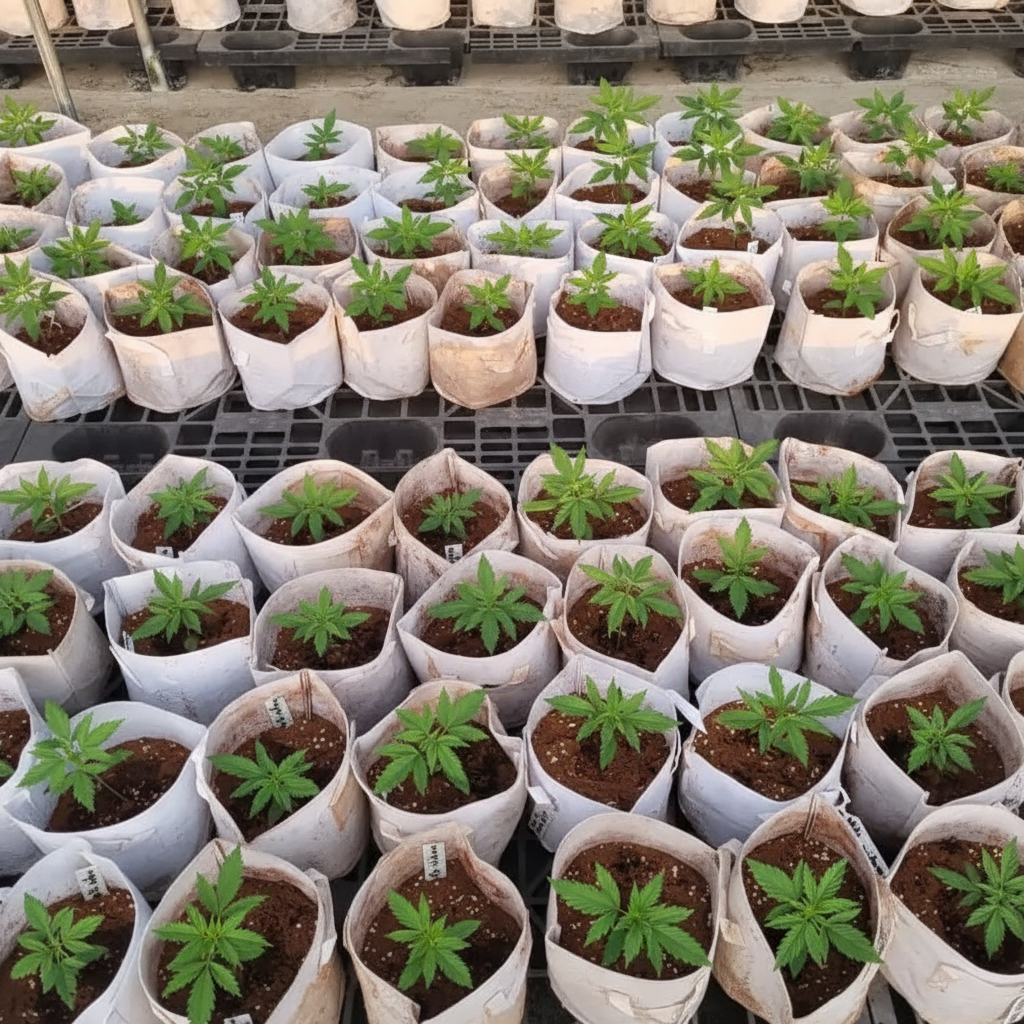
Switching to autoflowers at scale does require some changes in infrastructure. Because the plants have a shorter life, you need to be ready to transplant or direct seed into final containers quickly. Many commercial growers use one-gallon or two-gallon pots to save space and allow more plants per square foot. Autoflowers do not need huge root zones like photoperiod plants can use, so high-density planting works well.
Irrigation also needs to be precise. Drip systems with timers work well, but you need to adjust the schedule as the plants move through their rapid growth. I have seen setups where the same nutrient solution recipe is used for the entire cycle with only minor tweaks. That simplicity reduces the risk of mixing errors and saves labor.
One more thing: do not forget about drying and curing. The faster harvest cycles mean you will have more frequent batches to process. Plan your drying room capacity before you scale up. Nothing hurts quality more than rushing the dry because you have another harvest coming in next week.
The Bottom Line on Commercial Autoflower Seeds
For anyone serious about commercial cannabis cultivation, commercial autoflower seeds are not a compromise. They are a strategic choice. They let you produce consistent, high-quality cannabis with fewer variables, faster turnaround, and more predictable labor needs. The genetics have come a long way, and the best seed banks now offer strains that rival anything in the photoperiod world.
Whether you are a seasoned grower or just starting your first wholesale operation, it is worth taking a hard look at what autoflowering genetics can do for your bottom line. Talk to other growers, run small trials, and find a supplier with proven stock. The days of treating autoflowers as a novelty are over. They are a serious tool for anyone trying to make a living from this plant.